

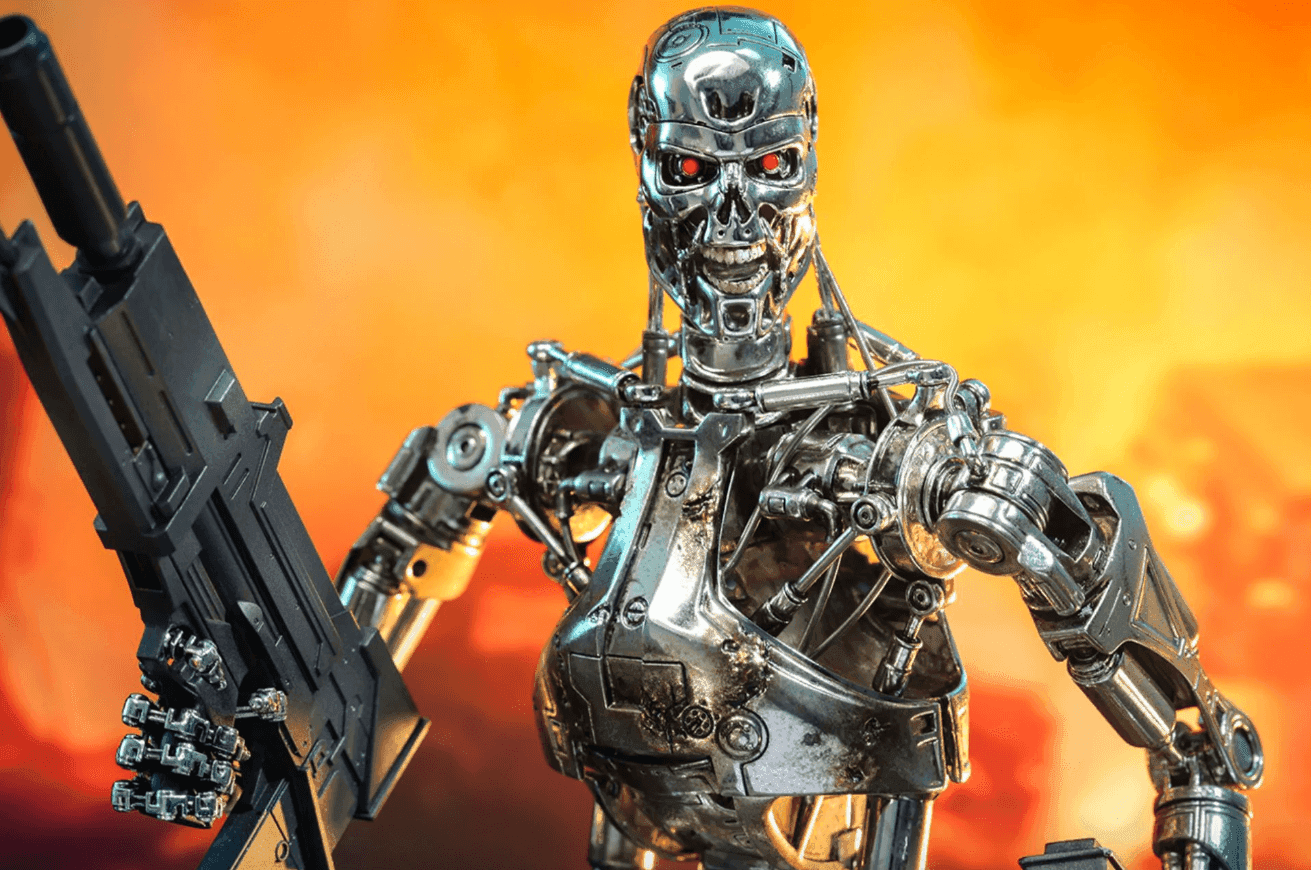
The Leading Cybersecurity Threat for 2026
Welcome to the age of AI-driven cyberattacks.
UBX Cloud
For years we’ve been telling you how important it is to stay current on all manners of cybersecurity best practices – because the cyber attackers are constantly seeking ways to beat these measures.
All of that is still true, but there’s a new factor you can’t ignore as we head into 2026: What if the cyberattacks don’t even need to be perpetrated by people anymore? What if they self-evolve and launch attacks without any human involvement?
Welcome to the age of AI-driven cyberattacks.
The consequences of an attack are just as great as they’ve ever been, and you still need every defense available to protect your data and your system. It’s just that now the malware can attack you on its own.
No one should be surprised by this. Look at how effectively cyberattackers have exploited vulnerabilities in platforms like Microsoft Teams and Sharepoint in recent years. They know that many people use these platforms, so they work overtime to find points of attack against them. Once they do, just about everyone who uses them is at risk.
Today there are millions of companies and individuals using AI tools for everything from research to chatbot applications to actual creative output. They love how easy and quick AI makes things, but it doesn’t occur to them that these tools could come with their own cyberthreats.
But they do, and it’s not surprising when you consider where the “intelligence” part of artificial intelligence comes from. AI is constantly collecting data. That’s how it learns. That includes user data, including location information, buying practices and contact information.
And if AI can learn who you are, what you do and where you’re vulnerable, it can also learn to launch its own attacks without having to wait for anyone to tell it to. We’re seeing a significant rise in attackers’ use of autonomous malware to launch large-scale phishing and social engineering campaigns – all of it powered by AI.
Anthropic reported in November that one of its own tools was manipulated into targeting 30 global targets, most likely with a Chinese state-sponsored group as the threat actor:
In mid-September 2025, we detected suspicious activity that later investigation determined to be a highly sophisticated espionage campaign. The attackers used AI’s “agentic” capabilities to an unprecedented degree—using AI not just as an advisor, but to execute the cyberattacks themselves.
The threat actor—whom we assess with high confidence was a Chinese state-sponsored group—manipulated our Claude Code tool into attempting infiltration into roughly thirty global targets and succeeded in a small number of cases. The operation targeted large tech companies, financial institutions, chemical manufacturing companies, and government agencies. We believe this is the first documented case of a large-scale cyberattack executed without substantial human intervention.
Now this does work both ways. We have AI tools in our security bundle that help our analysts assess potential breaches to see what requires the most direct attention and immediate action. If AI can be used to launch attacks, AI can also be used to anticipate, detect and stop them.
But along with the need for more AI-driven security tools, the industry is going to continue to need more human cybersecurity talent. The AI tools can detect threats and patch vulnerabilities really fast. But they can’t understand what’s happening like seasoned professionals can.
Any company that takes cybersecurity seriously needs people who can analyze and interpret what’s happening, and advise leadership on how to make complex decisions about real and potential threats – and the best strategies to protect against them.
We’re not here to scare you. We’re here to make sure you’re ready.
Our security team and our tech stack always stay several steps ahead of these trends – even the fast-evolving ones that are driven by AI.
But the more you use AI – heck, the more everyone uses AI – the easier it is for the bad guys to use it to come after you. It’s evolving that fast and gaining that much sophistication.
This is the most important cybersecurity trend to understand, and prepare for, in 2026.
Are you ready? Are you sure? We should probably talk. (888) 509-2568.
Related Posts
All posts

Is AI Really As Cost-Effective As You’ve Been Led to Think It Is?
No.
Three Critical Issues in Cybersecurity for March 2026
This month we look at three issues: • Agentic AI and the problems it presents • Possible threats from online add-ons to familiar platforms • The skill gap in cybersecurity
How Grandpa Internet’s OpenStack Migration Effort Proved a Win for UBX Clients
We needed a solution, and we sicced Grandpa Internet himself – our own Reynaldo Martinez – on the problem.